
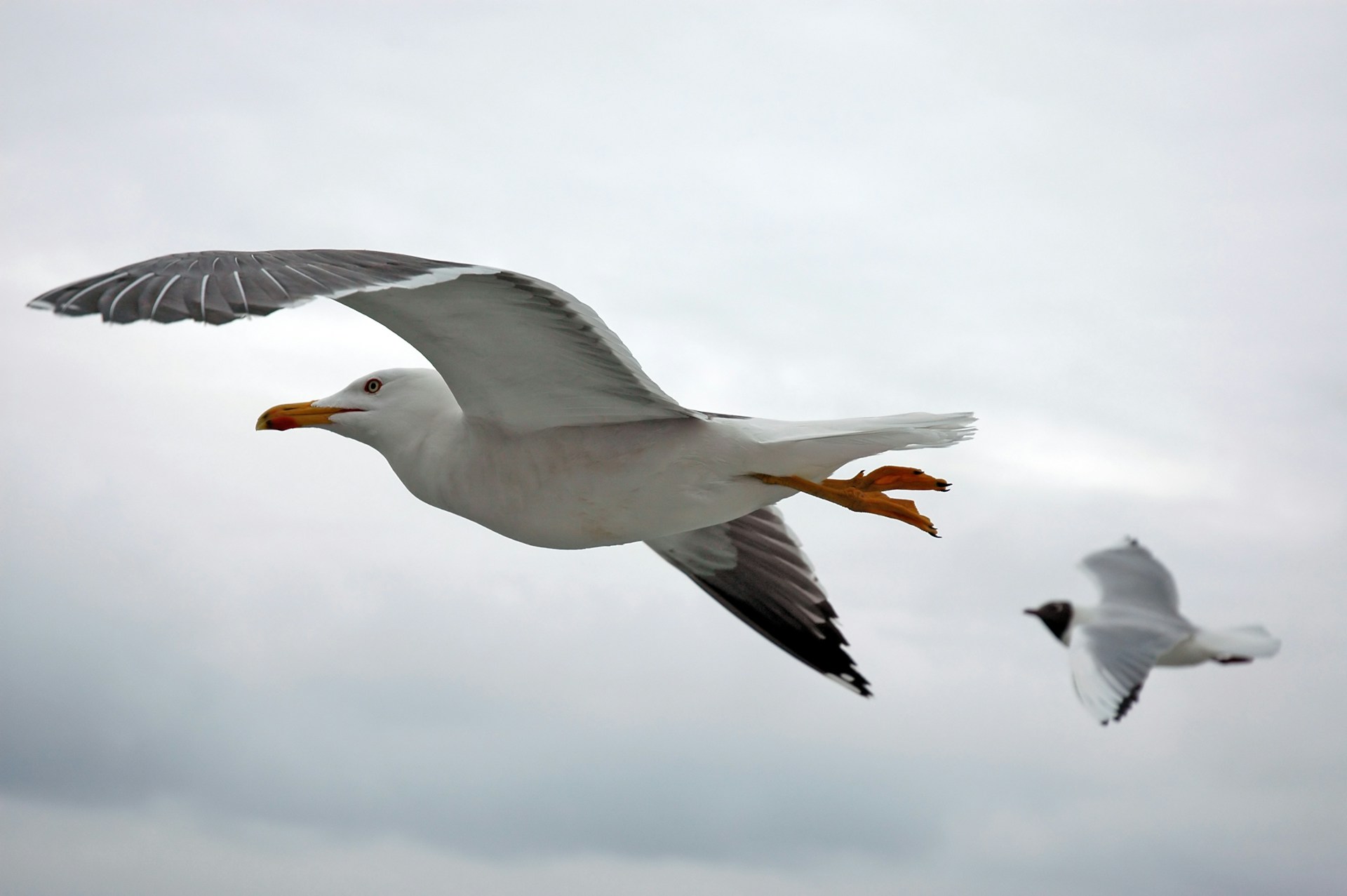
For centuries, humans have looked skyward with wonder, captivated by the effortless grace of birds gliding through the air. The dream of flight soaring above the earth, unbound by gravity has fueled imagination, from ancient myths to the sketches of Renaissance inventors. Among the earliest and most profound sources of inspiration for this dream were birds themselves. Observing their wings, movements, and mastery of the skies, early innovators began to unlock the secrets of flight. Birds’ anatomy, flight patterns, and behaviors didn’t just fascinate they provided a blueprint that ultimately guided the design and development of airplanes, turning a once-impossible dream into a reality that reshaped the world.
Early Observations of Birds
The human fascination with flight can be traced back to ancient myths, where stories of daring individuals attempted to transcend their earthly bounds. Tales like Icarus and Daedalus, who fashioned wings from feathers and wax, reveal an enduring curiosity about the skies. While these early narratives often ended in cautionary tragedy, they underscored a deep desire to understand and emulate the effortless flight of birds. Centuries later, Renaissance genius Leonardo da Vinci brought a more scientific eye to this pursuit, meticulously studying birds in motion and translating his observations into detailed sketches of flying machines. His notebooks capture the first attempts to analyze the mechanics of flight rather than simply dream of it.
Observers of the natural world began noting critical features of bird flight that would inform future aviation. The variations in wing shape, from broad soaring wings to slender flapping ones, revealed how birds adapted to different environments and tasks. They mastered the art of gliding over long distances, using thermal currents to conserve energy, and executing agile maneuvers with delicate control. Through these observations, early innovators began to appreciate the concepts of balance, lift, and aerodynamics principles that would later underpin the science of flight.
Mechanics of Bird Flight and Its Lessons
Birds’ wings are marvels of natural engineering. The curvature, angle, and flexibility of each wing create lift and control, allowing birds to maneuver with astonishing precision. Early aviation pioneers drew inspiration from these structures, adapting the principles of wing shape and aerodynamics to design fixed-wing airplanes capable of stable flight. Observing how birds could soar effortlessly or dive with speed provided insights into achieving both lift and efficiency in man-made aircraft.
While flapping flight seen in ornithopters captured the imagination, practical experimentation revealed its limitations. The energy required for human-powered flapping proved immense, steering inventors toward gliding and fixed-wing designs. Here, the lessons of nature were clear: mimic the efficiency of birds without replicating every detail. Likewise, the study of feathers, with their lightweight yet resilient structure, influenced material choices in early aircraft, inspiring innovations that balanced strength and weight, a cornerstone of modern airplane design.
Pioneers of Aviation Inspired by Birds
Among the first to systematically study birds for aviation insight was Otto Lilienthal. His glider experiments, inspired by the flight of birds, emphasized balance, control, and the principles of lift. Lilienthal’s meticulous records and daring flights laid a foundation that would inform future inventors, proving that controlled human flight was possible.
The Wright brothers built directly upon these lessons, carefully observing how birds twisted their wings for balance during turns. This insight led to their pioneering concept of wing warping, enabling precise control in their first successful powered flights. Beyond Lilienthal and the Wrights, innovators like Alexander Graham Bell and Hiram Maxim explored bird-inspired designs, demonstrating that nature offered a roadmap for solving the complex challenges of flight.
Bird-Inspired Innovations in Modern Aviation
Today, birds continue to shape the evolution of flight technology. Modern airplanes feature winglets, small upward tips that mimic the wings of soaring birds to reduce drag and improve fuel efficiency. Drones, too, increasingly draw on avian principles: flapping-wing drones emulate bird wing motion, while biomimicry informs adaptive wings that adjust in response to wind conditions. Researchers study migratory patterns and hovering techniques to inspire future aircraft capable of greater endurance and maneuverability. Nature’s designs remain a living laboratory for innovation.
Lessons From Nature
The story of birds and airplanes illustrates the power of observation and imitation. By studying creatures perfected by millions of years of evolution, humans learned to design machines that were not only functional but efficient and adaptable. Birds teach valuable lessons about balance, energy conservation, and structural ingenuity concepts that continue to influence aerospace engineering and sustainable design.
Conclusion
From the mythical Icarus to the Wright brothers’ first flight, birds have inspired humans to reach for the skies. Their anatomy, flight techniques, and behavior provided the blueprint for airplanes, guiding innovation from early gliders to today’s sophisticated aircraft. As aviation advances, nature remains an enduring source of inspiration, reminding us that the dream of flight began by watching creatures who had already mastered the skies. What was once mere aspiration is now a defining achievement of human ingenuity a testament to the enduring lessons that birds offer in the art and science of flight.